
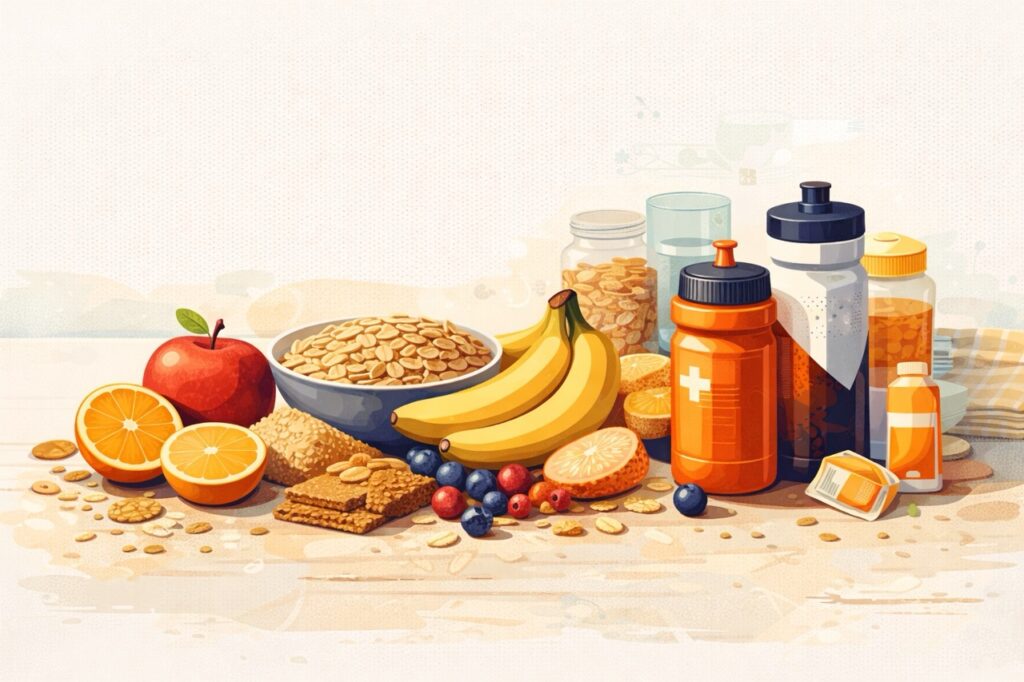
Just finished analyzing your ride on the FIT File Analyzer and noticed a significant “Carbs Still Needed” number? You’re not alone. Many endurance athletes finish long or intense rides with carbohydrate deficits ranging from 100 to 500+ grams. But how do you safely and effectively replenish those depleted glycogen stores without overwhelming your digestive system?
This comprehensive, research-backed guide will show you exactly how to refuel after rides of any intensity or duration, using evidence from 17+ peer-reviewed studies and expert recommendations from leading sports nutritionists.
Understanding Your Carb Deficit
When you see a carb deficit on your FIT analysis (for example, “-180g carbs still needed”), this represents the gap between what your body burned during the ride and what you consumed. This isn’t necessarily bad—strategic underfueling during training can have benefits—but understanding how to recover properly is crucial for:
- Glycogen replenishment: Restocking muscle and liver carbohydrate stores for your next workout
- Training adaptation: Supporting the recovery processes that make you stronger
- Immune function: Preventing the immunosuppression that occurs with chronic carb depletion
- Performance: Ensuring you can train hard again within 12-48 hours
Your carb deficit depends on multiple factors: ride intensity, duration, your VO2 max, body weight, and metabolic efficiency. The FIT File Analyzer calculates this based on your power output, heart rate data, and physiological profile.
The Science of Glycogen Resynthesis
After exercise, your muscles are primed to absorb carbohydrates at an accelerated rate. Research by Ivy et al. (1988) showed that glycogen synthesis occurs fastest in the first 2 hours post-exercise, with rates of 5-10% per hour when carbohydrates are consumed immediately. After this window, synthesis rates drop by approximately 50%.
However, more recent research (Kerksick et al., 2017) has shown that while this “glycogen window” exists, it’s more flexible than previously thought. If you’re not training again within 8-12 hours, you have more flexibility in your refueling timeline—though starting sooner is always better.
Key finding: Combining carbohydrates with protein in a 4:1 ratio increases glycogen synthesis by 30-50% compared to carbs alone (van Loon et al., 2000). The protein stimulates insulin release and provides amino acids for muscle repair.
Immediate Post-Ride Window (0-30 Minutes)
Your priority in the first 30 minutes is getting fast-absorbing carbohydrates into your system. Liquid calories are preferred because:
- Faster gastric emptying (liquids leave the stomach quicker)
- Reduced digestive stress after exercise
- Better palatability when appetite is suppressed
- Simultaneous rehydration
Best Fast-Absorbing Carb Sources
| Food | Carbs per Serving | Why It Works |
|---|---|---|
| Chocolate Milk (16oz) | 50g + 16g protein | Perfect 4:1 ratio, liquid form, tasty |
| Orange Juice (16oz) | 52g | Glucose + fructose blend, vitamin C |
| Sports Drink (20oz) | 35-45g | Rapid absorption, electrolytes included |
| Smoothie (large) | 60-80g | Customizable, can add protein powder |
| Ripe Banana | 27g | Easy to digest, portable, potassium |
| White Bagel | 45-55g | High GI, low fiber, filling |
Recommended immediate intake: 0.8-1.2 grams of carbs per kilogram of body weight. For a 70kg (154lb) athlete, that’s 56-84 grams in the first 30 minutes.
Recovery Timelines by Deficit Size
Not all deficits are created equal. Here’s how to approach different levels of carbohydrate depletion:
Small Deficit (<50g carbs)
- Recovery Time: 4-6 hours
- Strategy: Single post-ride meal is sufficient
- Example: 1 bagel with peanut butter + 16oz orange juice + protein shake = 110g total
- Next Meal: Return to normal eating pattern
Moderate Deficit (50-150g carbs)
- Recovery Time: 12-24 hours
- Strategy: 2-3 carb-focused meals over 6-12 hours
- Approach: Mix fast-absorbing carbs immediately, then transition to whole food carbs
- Sleep Factor: Most glycogen synthesis occurs during sleep—aim for 8+ hours
Large Deficit (150-300g carbs)
- Recovery Time: 24-48 hours
- Strategy: Multiple carb-rich meals across 2 days
- Critical: Use tapering approach to avoid GI distress
- Protein: Continue 4:1 ratio through all meals
Massive Deficit (>300g carbs)
- Recovery Time: 48-72 hours
- Context: Ultra-endurance events (double centuries, Ironman, 200+ mile rides)
- Strategy: Multi-day progressive refueling protocol
- Warning: Don’t try to make up the entire deficit in 24 hours
The Tapering Strategy for Huge Deficits
Attempting to consume 300-500g of carbs in a few hours leads to GI distress, nausea, and ironically can suppress appetite for the rest of the day. Here’s the scientifically-backed approach:
Hour 0-2: Aggressive Start (100-150g)
- Spread across 3-4 small servings every 30 minutes
- Liquid calories strongly preferred
- Example schedule:
- 0 min: 20oz sports drink (40g)
- 30 min: 16oz chocolate milk (50g)
- 60 min: 1 banana + honey drizzle (35g)
- 90 min: Recovery bar (30g)
Hour 2-6: Transition Phase (150-200g)
- Can introduce solid foods
- 2-3 meals or substantial snacks
- Mix high and moderate GI foods
- Examples:
- Hour 2: Large smoothie bowl with granola (80g)
- Hour 4: Pasta with marinara and chicken (120g)
Hour 6-24: Normalization (300-400g)
- Return to regular meal structure
- 3 main meals + 2 snacks
- Emphasize whole food carbs
- Sample day:
- Dinner: Rice bowl with protein and veggies (120g)
- Evening snack: Granola with yogurt (60g)
- Breakfast: Oatmeal with fruit and honey (80g)
- Lunch: Large sandwich with chips (100g)
- Afternoon: Trail mix and fruit (40g)
Day 2+: Maintenance
- Return to normal diet with 20-30% carb increase
- Monitor energy levels and performance
- May experience glycogen supercompensation (Bergström & Hultman, 1967)
Four Detailed Refueling Plans
Example 1: 2-Hour Moderate Ride (-80g Deficit)
Athlete Profile: 70kg cyclist, Zone 2-3 effort, morning ride
Immediate (0-30 min):
16oz chocolate milk (50g carbs, 16g protein)
1 Hour Post:
2 scrambled eggs + 2 slices white toast with jam (40g carbs)
8oz orange juice (24g carbs)
Total Recovered: 114g (covers deficit plus extra for daily activity)
Example 2: 4-Hour Hard Ride (-200g Deficit)
Athlete Profile: 75kg cyclist, mixed zones with threshold intervals
Immediate (0-15 min):
20oz sports drink (40g carbs)
30 Minutes Post:
Large smoothie: banana, berries, protein powder, oats, milk (80g carbs, 25g protein)
2 Hours Post:
Large bowl of pasta with marinara + grilled chicken breast (120g carbs, 40g protein)
2 slices garlic bread (30g carbs)
5 Hours Post:
Dinner: Rice bowl with salmon and roasted vegetables (100g carbs, 35g protein)
Evening Snack:
Granola bar + medium apple (40g carbs)
Total: ~410g carbs (covers 200g deficit + 210g for daily needs)
Example 3: Century Ride (-350g Deficit)
Athlete Profile: 80kg cyclist, 100 miles in 6 hours, high intensity
Hour 0-0.5:
16oz chocolate milk (50g)
1 large banana (27g)
Hour 1:
Bagel with 2 tbsp peanut butter + honey drizzle (60g)
12oz orange juice (36g)
Hour 3:
Large burrito bowl: rice, black beans, chicken, salsa (140g carbs)
Hour 6:
Dinner: Large pasta dish with meat sauce (150g carbs)
Garlic bread (40g)
Hour 8 (Evening):
Ice cream with granola topping (50g)
Next Morning:
Large breakfast: Stack of pancakes with syrup, fruit salad (100g)
Total: ~653g over 24 hours
Example 4: Ultra Endurance Event (-500g+ Deficit)
Athlete Profile: 70kg, 200-mile double century or Ironman triathlon
Day 1 (Event Day) – Hour 0-2:
Recovery drink every 30 minutes (40g × 4 servings = 160g)
Hour 2-6:
Hour 2: Smoothie bowl with granola (80g)
Hour 4: Large pasta meal (120g)
Hour 6: Personal pizza (100g)
Hour 6-Bedtime:
Evening snack: Bowl of cereal with milk (60g)
Before bed: Toast with jam (40g)
Day 1 Total: ~560g
Day 2 (Recovery Day):
Breakfast: Large bowl oatmeal with fruit and nuts (80g)
Mid-morning: Muffin (50g)
Lunch: Sandwich with chips and fruit (100g)
Afternoon: Protein bar (30g)
Dinner: Rice with stir-fry (120g)
Evening: Greek yogurt with granola (40g)
Day 2 Total: ~420g
Day 3: Return to normal 300-400g/day intake
Common Mistakes to Avoid
❌ Overcompensating Immediately
The Mistake: Eating 300g of carbs in the first hour post-ride
The Result: GI distress, nausea, bloating, ironically kills appetite
The Fix: Spread intake over 4-6 hours with small frequent servings
❌ Ignoring Protein
The Mistake: Consuming only carbohydrates
The Result: 30-50% reduction in glycogen synthesis rate, impaired muscle repair
The Fix: Include 15-25g protein with each carb-rich meal (4:1 carb:protein ratio)
❌ Using Only Slow-Absorbing Carbs
The Mistake: Whole grain bread, brown rice, beans immediately post-ride
The Result: Too slow for optimal glycogen synthesis in the critical window
The Fix: Use fast carbs (white bread, juice, sports drinks) for first 2-4 hours, then transition to whole grains
❌ Not Drinking Enough Fluids
The Mistake: Focusing only on solid food
The Result: Dehydration impairs glycogen storage (requires 3g water per 1g glycogen)
The Fix: Drink 1.5L of fluid per kg of weight lost, with 300-500mg sodium per liter
❌ Waiting Too Long to Start
The Mistake: “I’ll eat when I get home” (2 hours later)
The Result: Glycogen synthesis rate drops by 50% after 2 hours
The Fix: Start refueling within 30 minutes—bring recovery nutrition with you
❌ Undereating Out of Fear
The Mistake: “I don’t want to undo my workout” / diet mindset
The Result: Chronic underfueling leads to overtraining, injury, illness, hormonal disruption
The Fix: Trust the data from your FIT analysis—those calories were burned and need replacement
Individual Considerations
Body Weight Matters
Recommendations should be scaled to body weight. A 300g deficit means different things for different athletes:
- 50kg athlete: 300g deficit = 6g/kg (massive relative depletion)
- 70kg athlete: 300g deficit = 4.3g/kg (significant depletion)
- 90kg athlete: 300g deficit = 3.3g/kg (moderate depletion)
Training Status
Elite and well-trained athletes resynthesize glycogen up to 50% faster than novice athletes (Burke et al., 2011). This adaptation develops over months and years of consistent training.
Time to Next Hard Session
- <8 hours: Aggressive refueling required (e.g., multi-session training day)
- 12-24 hours: Standard protocol applies
- 24+ hours: Relaxed approach acceptable—focus on total daily intake
Dietary Preferences
- Vegan/Vegetarian: Rice, pasta, bread, fruits, plant-based protein shakes, tofu/tempeh
- Gluten-Free: Rice, potatoes, certified GF oats, fruit, GF bread/pasta
- Paleo: Sweet potatoes, fruits, honey, white rice (flexible approach)
- Keto Athletes: Different paradigm—focus on exogenous ketones and MCT oil rather than carb replenishment
GI Sensitivity
For athletes with IBS or sensitive stomachs, stick to low-FODMAP options:
- Safe choices: White rice, sourdough bread, lactose-free dairy, bananas, potatoes
- Avoid: Beans, onions, garlic, wheat (if sensitive), high-lactose dairy
- Strategy: Smaller, more frequent meals rather than large boluses
Integration with FIT File Analyzer
The FIT File Analyzer calculates your carb deficit using your power output, heart rate data, estimated VO2 max, and ride duration. Here’s how to use this data:
- Upload your .FIT file to the analyzer
- Navigate to the VO2-Based Energy & Fuel Analysis card
- Note your “Carbs Still Needed” value (e.g., -180g)
- Use this number to plan your recovery using the timelines above
- Track how you feel on subsequent rides to fine-tune your approach
The more data you collect about your individual response, the better you can personalize your refueling strategy. Some athletes need less than the formulas suggest; others need more.
Frequently Asked Questions
Q: Do I need to make up every single gram of carbs I burned?
A: Not necessarily. Your body also needs carbs for daily activity (brain function, organ function, walking around). A better approach is to consume your deficit PLUS your typical daily carb intake. For most athletes, this is 3-5g/kg body weight on recovery days.
Q: What if I’m trying to lose weight?
A: You can still maintain a caloric deficit while properly refueling carbs—reduce fat intake instead. Chronically underfueling carbs impairs performance, recovery, and ironically makes fat loss harder by disrupting hormones. Better to have a small deficit (200-300 calories) consistently than to bonk repeatedly.
Q: Is the “glycogen window” real or a myth?
A: It’s real but more flexible than originally thought. Glycogen synthesis IS faster in the first 2 hours (Ivy et al., 1988), but if you’re not training again for 24+ hours, you can be more relaxed about timing. That said, starting sooner is always better—there’s no downside to immediate refueling.
Q: What about fasted training adaptations?
A: Training with low glycogen (“train low, race high”) can enhance fat oxidation and mitochondrial adaptations. However, you should still refuel AFTER these sessions. The adaptation comes from training depleted, not from staying depleted chronically. Refuel properly, then do your next fasted session when recovered.
Q: Can I have alcohol post-ride?
A: Alcohol impairs glycogen synthesis, protein synthesis, and recovery (Burke et al., 2003). If you’re going to drink, wait until after you’ve consumed your initial refueling meal (2-3 hours post), keep it moderate (1-2 drinks), and ensure you’re eating plenty of carbs alongside it. Better yet, save drinking for rest days.
Q: Should I use supplements or whole foods?
A: Both have a place. Immediately post-ride (0-30 min), supplements and simple foods work better because they’re easier to consume when appetite is low. For later meals (2+ hours post), whole foods provide more nutrients, fiber, and satiety. Ideal approach: Start with simple/liquid, transition to whole foods.
Q: What if I’m not hungry after a hard ride?
A: This is completely normal—exercise suppresses appetite temporarily. This is exactly WHY liquid calories are so valuable post-ride. You can drink a smoothie or chocolate milk even when solid food sounds unappealing. Appetite typically returns 1-2 hours post-ride.
The Bottom Line
Post-ride carbohydrate recovery isn’t complicated, but it does require intentionality. The key principles:
- Start immediately (within 30 minutes)
- Use liquid calories first
- Include protein (4:1 carb:protein ratio)
- Scale to your deficit size using the timelines above
- Taper for huge deficits (don’t try to make it all up at once)
- Listen to your body but trust the data
By following these evidence-based strategies, you’ll recover faster, perform better in subsequent sessions, and avoid the pitfalls of chronic underfueling. Use your FIT File Analyzer data to guide your approach, then fine-tune based on how you feel.
Remember: the work you put in during training is only realized through proper recovery. Refueling isn’t undoing your ride—it’s completing it.
References & Further Reading
- Ivy, J.L. et al. (1988). “Muscle glycogen synthesis after exercise: effect of time of carbohydrate ingestion.” Journal of Applied Physiology, 64(4), 1480-1485. DOI: 10.1152/jappl.1988.64.4.1480
- van Loon, L.J. et al. (2000). “Maximizing postexercise muscle glycogen synthesis: carbohydrate supplementation and the application of amino acid or protein hydrolysate mixtures.” American Journal of Clinical Nutrition, 72(1), 106-111. DOI: 10.1093/ajcn/72.1.106
- Jentjens, R., & Jeukendrup, A.E. (2003). “Determinants of post-exercise glycogen synthesis during short-term recovery.” Sports Medicine, 33(2), 117-144. DOI: 10.2165/00007256-200333020-00004
- Burke, L.M. et al. (2011). “Carbohydrates for training and competition.” Journal of Sports Sciences, 29(sup1), S17-S27. DOI: 10.1080/02640414.2011.585473
- Kerksick, C.M. et al. (2017). “International society of sports nutrition position stand: nutrient timing.” Journal of the International Society of Sports Nutrition, 14(1), 33. DOI: 10.1186/s12970-017-0189-4
- Thomas, D.T. et al. (2016). “Position of the Academy of Nutrition and Dietetics, Dietitians of Canada, and the American College of Sports Medicine: Nutrition and Athletic Performance.” Journal of the Academy of Nutrition and Dietetics, 116(3), 501-528. DOI: 10.1016/j.jand.2015.12.006
- Bergström, J., & Hultman, E. (1967). “Muscle glycogen synthesis after exercise: an enhancing factor localized to the muscle cells in man.” Nature, 210(5033), 309-310. DOI: 10.1038/210309a0
- Betts, J.A. et al. (2008). “Recovery of endurance running capacity: effect of carbohydrate-protein mixtures.” International Journal of Sport Nutrition and Exercise Metabolism, 18(6), 595-610. DOI: 10.1123/ijsnem.18.6.595
- Burke, L.M. et al. (2017). “Low carbohydrate, high fat diet impairs exercise economy and negates the performance benefit from intensified training in elite race walkers.” Cell Metabolism, 26(5), 807-822. DOI: 10.1016/j.cmet.2017.10.010
- Jeukendrup, A. (2014). “A Step Towards Personalized Sports Nutrition: Carbohydrate Intake During Exercise.” Sports Medicine, 44(Suppl 1), S25-S33. DOI: 10.1007/s40279-014-0148-z
Disclaimer: The information in this article is for educational purposes and should not replace personalized advice from a registered dietitian or sports nutritionist. Individual carbohydrate needs vary based on body composition, training status, metabolic health, and goals. Always consult with a qualified professional before making significant dietary changes.
Ready to analyze your rides? Upload your FIT file to see your personalized carb deficit and start optimizing your recovery today.